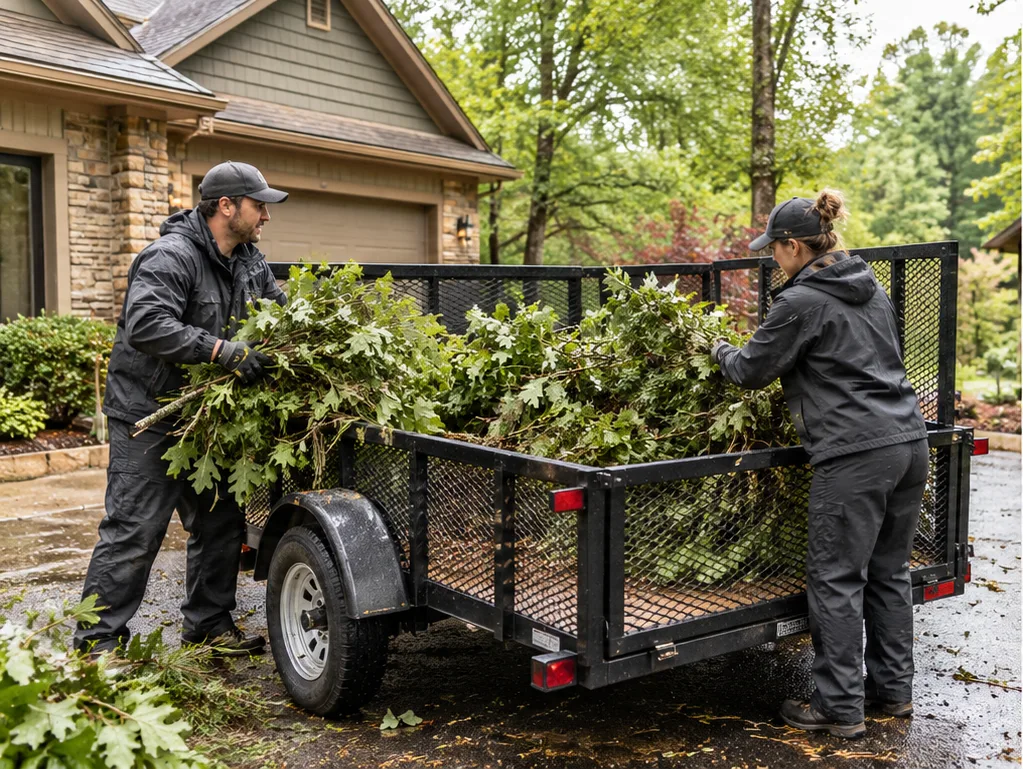
What this service covers
Haul-away can begin after the site is safe and the debris is separated; hazardous tree work needs the right specialist first.
Commonly reviewed
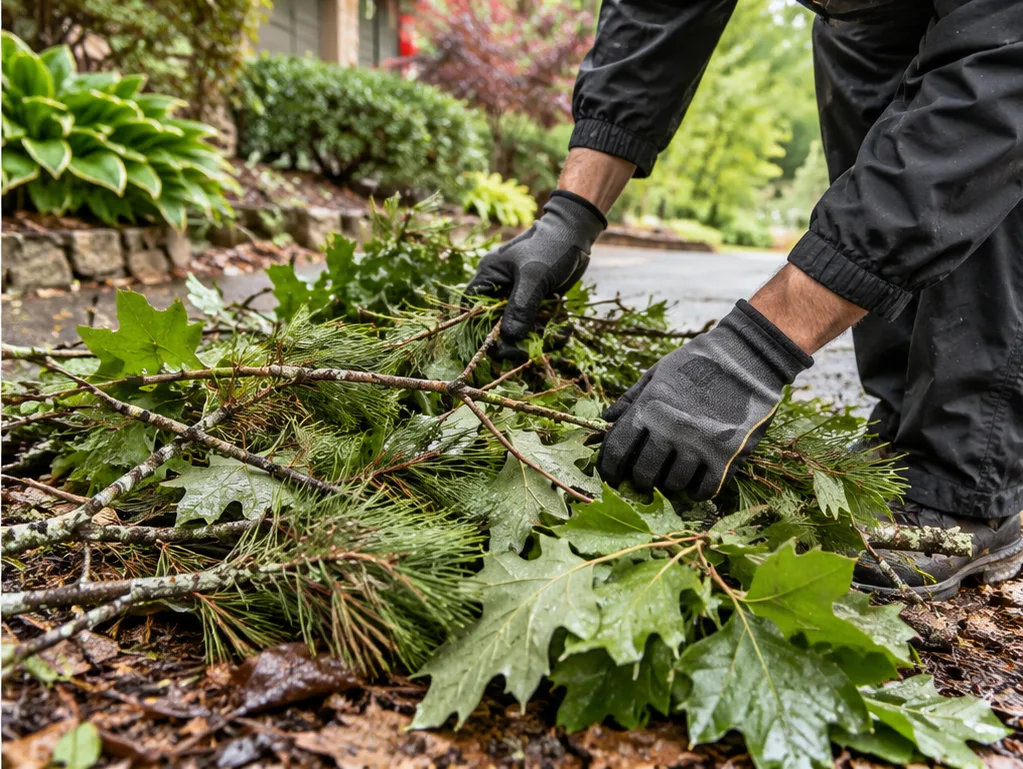
- Branches and vegetative debris resting on the ground
- Separated leaves and brush from storm cleanup
- Cut sections staged away from traffic and utilities
- Material with a clear, safe loading route
Ask before including
- Downed lines or debris touching utilities
- Hung, bent, tensioned, or unstable branches
- Flood-contaminated material or hazardous waste
- Emergency cutting, crane work, or structural debris
Safety boundary: Haul-away is different from hazardous tree work. Do not approach downed lines, unstable trees, hung limbs, or tensioned branches.
How to prepare the request
Photograph the complete pile from at least two directions. Include the path to the driveway or loading position. Measure the pile when practical and state whether all cutting is complete.
Access and estimate factors
The material, volume, moisture, largest pieces, distance to the truck, stairs, gates, slopes, and soft ground can change the work. Soil, stone, sod, root balls, treated wood, fencing, and trash must be disclosed separately.
What happens next
- Call with the address, material, pile size, and access details.
- Share photos if requested so the scope can be reviewed.
- Confirm the work and price before loading begins.
- Keep children, pets, vehicles, and loose objects away from the loading route.
A guide for this job
Is storm debris ready for hauling? explains how to prepare the material before you request haul-away.
Nearby service information
Review the service-area directory or start with the estimate checklist.