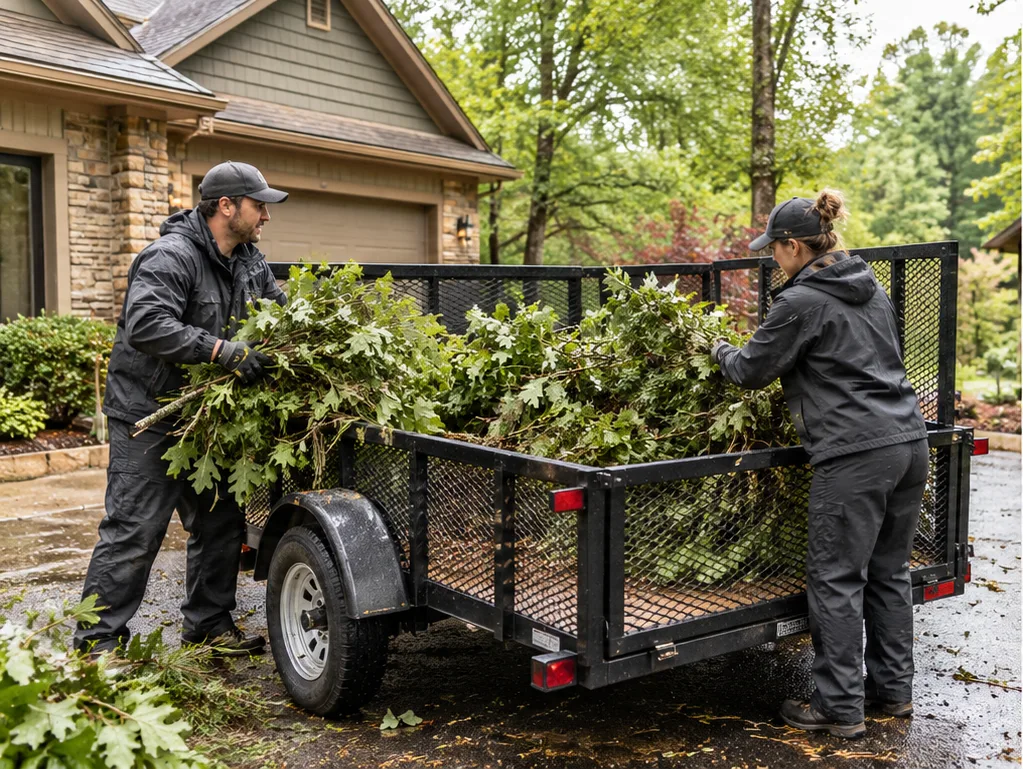
Storm debris is ready for haul-away only after immediate hazards are controlled. Grounded branches and separated leaves may be a hauling job. Downed lines, unstable trees, tensioned limbs, flood contamination, or structural debris need the appropriate emergency, utility, tree, or restoration professional first.
Stop and call the right specialist
- A line is down, sagging, or touching debris.
- A limb is hung, bent, split, or caught under tension.
- A tree is leaning or the root plate has lifted.
- Debris rests on a roof, vehicle, or occupied structure.
- Floodwater, fuel, chemicals, or sewage may have contaminated the pile.
North Carolina emergency guidance warns that bent and caught branches can kick back. The Forest Service advises people without safe chainsaw experience to consult a professional for large cutting work.
Separate material after the site is safe
Keep vegetative debris apart from household waste, construction material, appliances, electronics, and hazardous items. Separation helps public cleanup programs and private haulers identify the correct handling path. Place material out of travel lanes and away from hydrants, meters, mailboxes, and overhead lines.
Prepare the haul-away request
- Photograph the complete area from a safe distance.
- State whether all cutting is complete.
- Estimate pile dimensions and the largest branch diameter.
- Show the driveway, gate, slope, and loading distance.
- List any non-vegetative material separately.
A weather event does not guarantee emergency availability or a fixed schedule. Call once the site is safe to discuss the actual pile and access.
Plan the next step
Review the storm debris removal scope and the broader yard debris removal service. When the material is safe and ready to haul, use the estimate checklist before calling.
Sources for this guide
Material definitions and local preparation details come from the City of Asheville, Buncombe County, North Carolina DEQ, North Carolina Emergency Management, and the North Carolina Forest Service as relevant to the topic. Check the responsible authority for current address-specific rules.