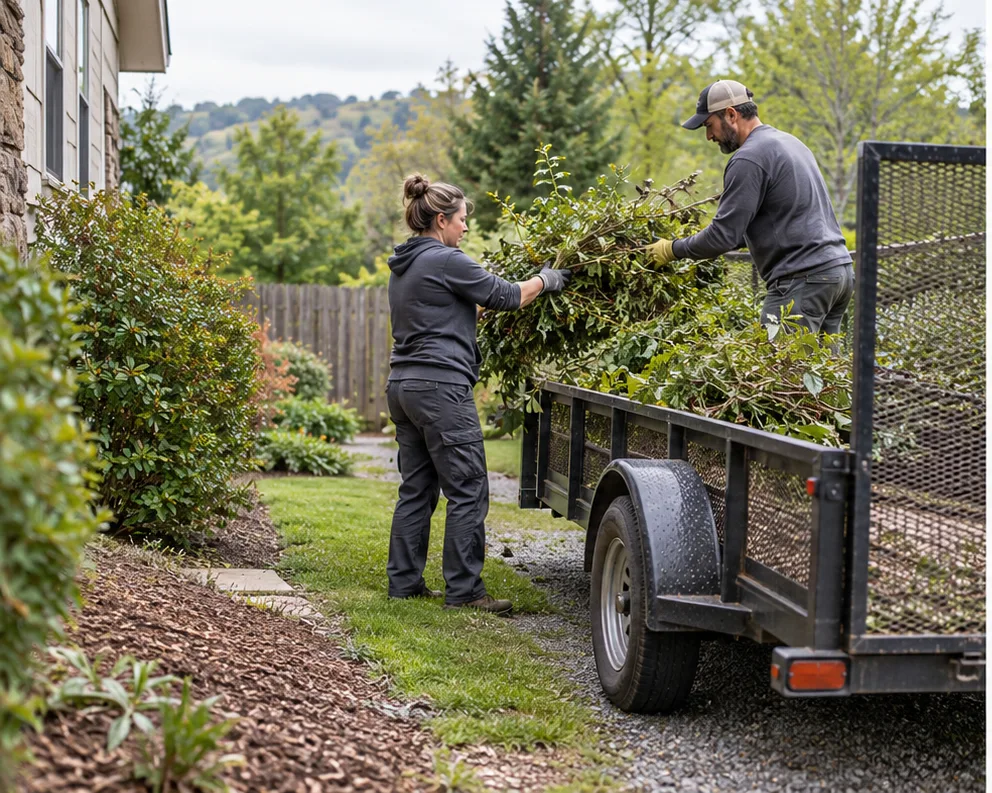
A mixed pile can hide wire, treated wood, soil, rocks, or irritating plants. Sort the pile by material before requesting pickup when it is safe to do so. Clear photos of anything you cannot identify are more useful than a broad “yard waste” label.
Use four simple groups
| Group | Examples | What to do |
|---|---|---|
| Woody brush | Shrub cuttings, small branches, hedge debris | Stack loosely and show the full pile. |
| Thorny or irritating plants | Rose canes, blackberry, poison ivy | Keep separate and disclose it before anyone handles the pile. |
| Soil-heavy material | Root balls, sod, mud, stones | Photograph separately; weight changes the job. |
| Non-vegetative material | Wire, fencing, plastic pots, treated lumber, trash | Remove from the brush pile and ask whether it can be handled separately. |
Why the separation helps
North Carolina defines yard trash as landscaping and maintenance material such as brush, grass, leaves, and tree limbs. A pile stops being a simple vegetative load when it contains household trash, construction debris, chemicals, or heavy soil. Separation makes the disposal path and load weight easier to review.
Photograph the pile honestly
- Take one wide photo before moving anything.
- Show the deepest or densest side of the pile.
- Photograph root balls, wire, or unknown material close up.
- Show the route through any gate or around a house.
- Mention slopes, soft ground, steps, pets, or locked access.
Do not burn a mixed brush pile as a shortcut. Local burning rules vary, and household or construction material cannot be burned with yard debris.
Plan the next step
Review the brush removal scope and the broader yard debris removal service. When the material is safe and ready to haul, use the estimate checklist before calling.
Sources for this guide
Material definitions and local preparation details come from the City of Asheville, Buncombe County, North Carolina DEQ, North Carolina Emergency Management, and the North Carolina Forest Service as relevant to the topic. Check the responsible authority for current address-specific rules.