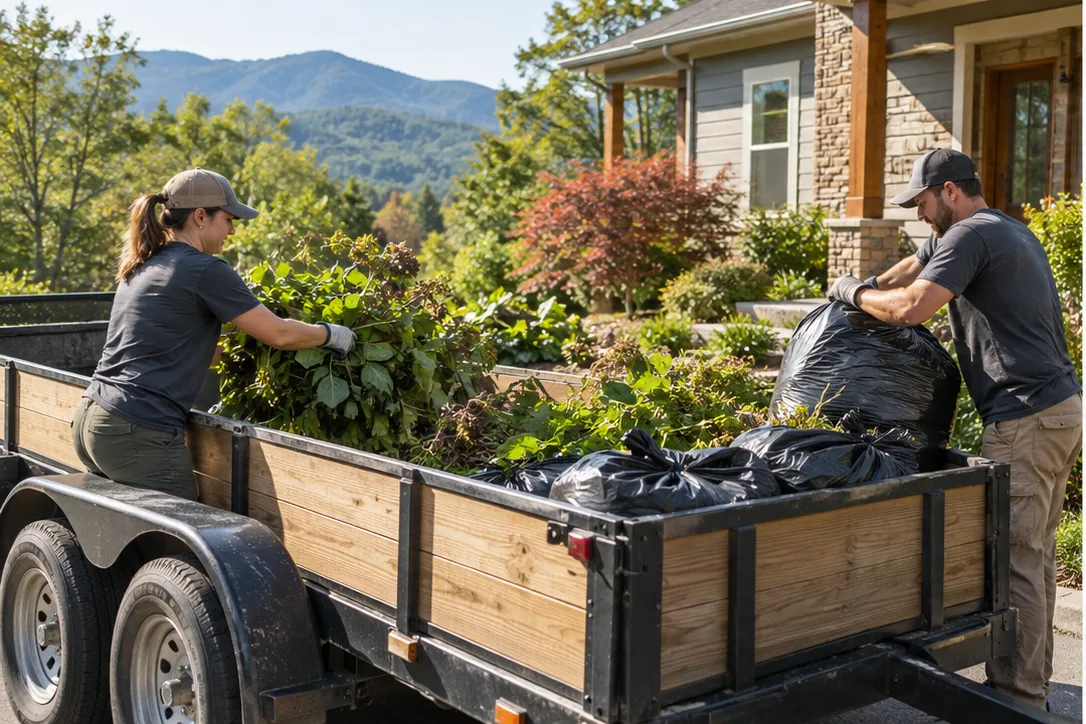
Landscape projects produce materials that look related but behave very differently in a truck. Dry trimmings are light. Wet sod, soil, and stone become heavy quickly. Plastic sheeting, treated lumber, edging, and concrete are not yard waste. List each material before asking for an estimate.
Material review matrix
| Material | Typical category | Best detail to send |
|---|---|---|
| Leaves, stems, and shrub cuttings | Vegetative debris | Pile dimensions or bag count |
| Sod and root balls | Soil-heavy material | Photos showing attached soil and moisture |
| Mulch and loose soil | Dense bulk material | Estimated depth and area |
| Stone, gravel, or pavers | Heavy mineral material | Piece size and total area |
| Edging, pots, fabric, and sheeting | Non-vegetative project waste | Material type and quantity |
Keep clean loads separate
Do not bury plastic, metal edging, irrigation parts, or bags under branches and leaves. A separated vegetative pile can be reviewed as yard debris. Mixed project waste may need a different load plan or may fall outside the service.
What changes the estimate
- Material type and moisture.
- Volume and the number of separate piles.
- Distance to a driveway or legal loading position.
- Steps, slopes, gates, and soft ground.
- Whether cutting, digging, or demolition is still required.
Send photos before moving a heavy landscape pile. The original spread often gives a better sense of area and depth than a compact mound.
Plan the next step
Review the landscaping debris removal scope and the broader yard debris removal service. When the material is safe and ready to haul, use the estimate checklist before calling.
Sources for this guide
Material definitions and local preparation details come from the City of Asheville, Buncombe County, North Carolina DEQ, North Carolina Emergency Management, and the North Carolina Forest Service as relevant to the topic. Check the responsible authority for current address-specific rules.